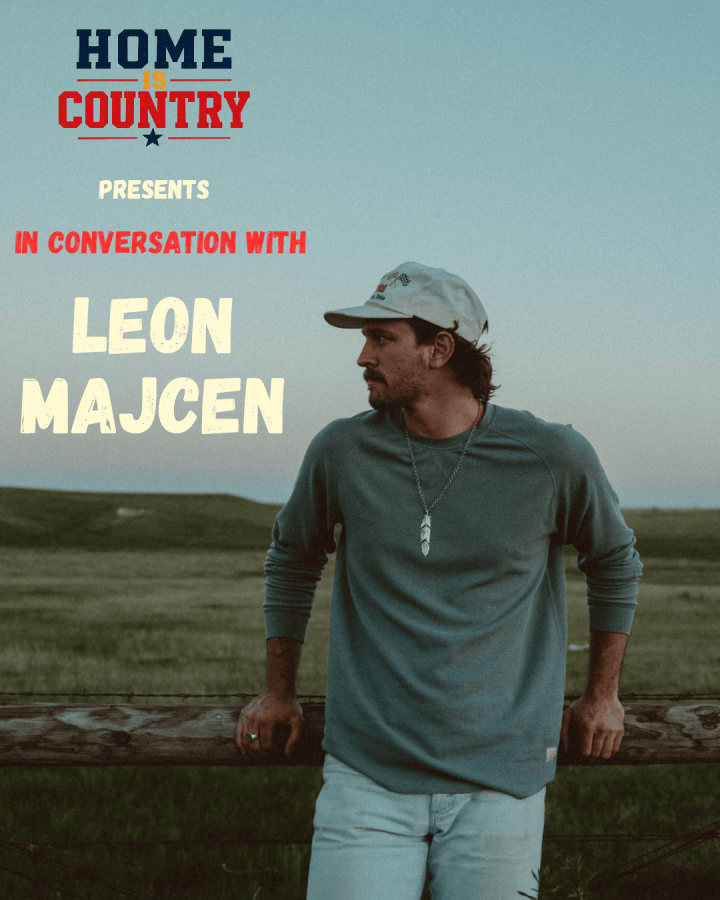
With a sound shaped by honest storytelling and life on the road, Leon Majcen is bringing his music to audiences across Europe.
Home Is Country caught up with Leon in London between shows to talk about his new album The Leaving Kind, life on the road, the artists who shaped him — and finding a place to call home.
Your new album The Leaving Kind arrives September 4. What feels different about this record compared with your previous albums?
“It’s my favourite record I’ve done so far. It’s the one I’m most proud of. I feel like I’ve sat on these songs a little longer than most of the other records I’ve put out. It feels like all the puzzle pieces are more put together now.”
Was there a particular song that unlocked what you wanted the record to be?
“When I wrote ‘Falling Short’ with my buddy Austin, the song came to us so easily — I think it was like 15 or 20 minutes. Pretty much after that song was done, I was like, ‘Shit, I know what the album’s gonna sound like.’”
How has your parents’ story and the way you were raised shaped the person and songwriter you are today?
“Nobody in my family really played music. I randomly got the bug. My parents were immigrants, and seeing them work jobs that they hated in the US was motivation to excel at what it is I love doing. If that meant getting to do something that I love and call it work, it’s a pretty good gig.”
Has your definition of success changed as you’ve grown as an artist?
“My aim now is just to be happy and make music that I like. As long as those two things are there, I’m all about it.”
Do you remember the moment music stopped being your parents’ music and became yours?
“It was when I found Townes Van Zandt.
“I was 15, I took my mom’s car on a joyride and thought I was super cool — driving around smoking a cigarette. A video of Townes singing ‘Pancho and Lefty’ came up on YouTube and I was like, ‘What’s this?’
“I went down that rabbit hole. That was probably the turning point in my life where I was like, ‘I know exactly what I wanna do and what kind of songs I wanna write.’
“My dad hadn’t heard of Townes. I showed him and he was like, ‘This is fucking great — where’d you find this?’”
Does constantly travelling give you more stories to write, or make it harder to find the quiet to write them?
“I think it makes it really easy to get the songs — the meat and potatoes of it. If I’m on the road, I usually just get ideas, and then when I come home and find some time to get bored, I’ll make sense of those ideas.”
You like to centre your gigs around finding a place to fish. Do you find where you wanna fish first and then plan the gig or the other way round?
“When I was still booking my own shows, that’s how I used to book them. It was like, ‘Alright, I wanna fish Montana, Wyoming and Idaho — I’m gonna book some gigs here and go fish there.’
“It’s definitely more of a job now, but I still find time to fish.”
More people are discovering your music and the rooms you play are getting bigger. What’s something about this stage of your career that you dreamed about during those early gigs?
“Honestly, I’m kind of amazed. We did Dublin yesterday and there were way more people than I expected — and they knew the words to the songs.
“I just think this shit’s crazy. I never expected any of this.
“I started doing it because I loved it. I’m just happy it’s going the way it’s going.”
What does home mean to you?
“I spent a lot of time feeling like I didn’t have roots anywhere.
“Recently I moved to Bozeman, Montana, and it’s the first time I’ve found myself living somewhere where I’m like, ‘I think I wanna get old here. I wanna plant some roots.’
“The first time I came there, I actually got into a bad car accident. We got hit by a drunk driver outside of Big Sky and my truck got totalled. One guy put us up, another guy had a spare car he let us use and took us fishing.
“I pretty much trauma-bonded with Montana.”

